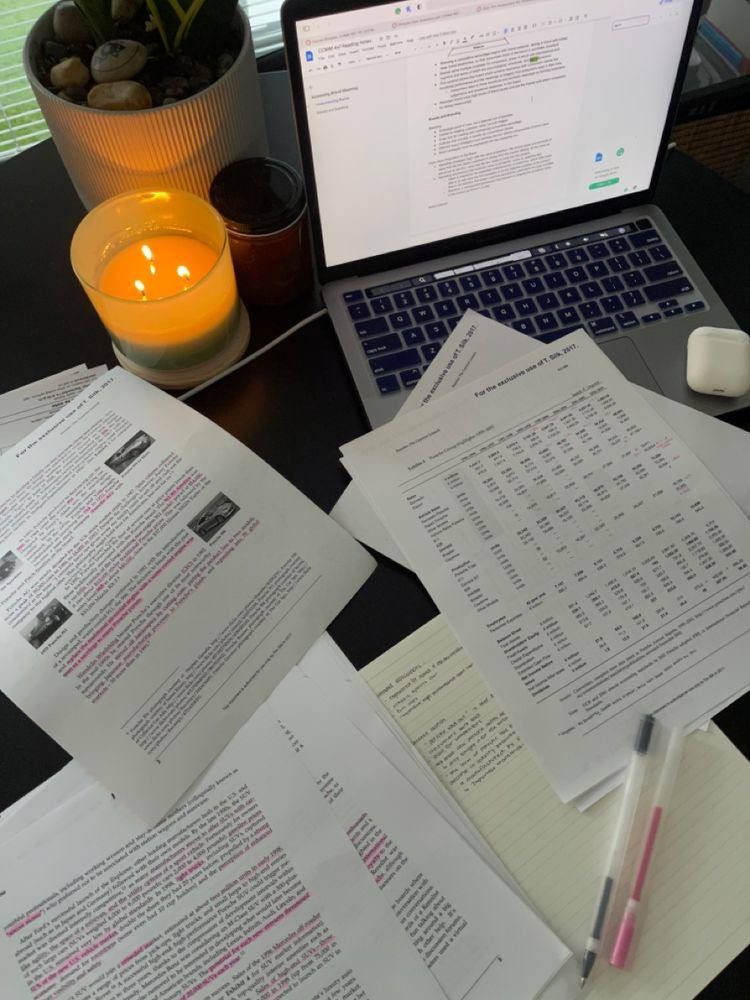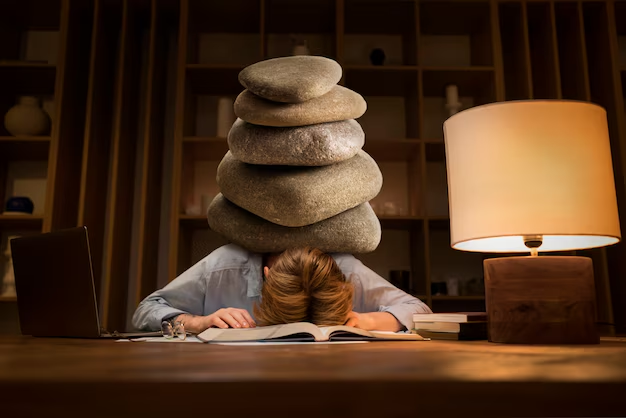
Do you know what the most difficult task is for a student to achieve? It is to balance their academic work and personal life, without missing out on either one of them two. Students often overlook their personal well-being when it comes to working on assignments, tests, and other academic demands. In fact, many students get PhD thesis consultation services or different forms of writing services to meet their academic challenges without sacrificing their personal life.
However, students who cannot pay for thesis help or writing support for any possible reason get stuck in this never-ending cycle, where they are forced to prioritise performing well academically or having a balanced personal life. The good news is that the balance between the two is possible if you have the right approach. You must understand how to balance academic and personal life without them clashing with each other. The following post explores the challenges students face, the need for balance, and practical approaches for getting it done.
Why Balance Matters More Than You Think?
A balanced life between academics and private life directly affects performance, health, and relationships. According to research by APA, students who manage their time well experience 30% less stress and higher grades. When students don’t have balance in their lives, they risk:
- Burnout: Too much commitment to studying without rest results in exhaustion and reduced productivity.
- Mental Health Deprivation: Depression and anxiety have a close link with academic stress.
- Weakened Relationships: Prioritising only academics can affect your friendships and family ties.
- Poor Academic Results: Ignoring personal well-being also results in poor concentration and memory retention.
Balance does not mean dividing time evenly; it means creating a lifestyle where neither academics nor personal life is constantly sacrificed.
The Real Struggles Students Face
The ability to strike a perceived sense of balance between work and life represents a challenge for many in academic and research sectors around the world (Bartlet et al., 2021). Many students struggle to balance their roles because academic systems demand constant performance. Some common challenges include:
- Heavy Workload: Multiple assignments, group work, and exams do not leave much time for students to relax.
- Lack of Boundaries: Online learning and online sites do not separate learning and personal time.
- Fear of Falling Behind: Students study beyond the requirement to avoid the risk of falling behind.
- External Pressures: Pressure from family, financial issues, or extracurricular work creates extra pressure.
When you identify these challenges, it becomes the beginning of finding workable solutions. Students must understand that imbalance is not a sign of weakness; it is a common experience in modern educational life.
Workable Strategies for Achieving Balance
You don’t have to go over the board to achieve the balance. There are simple rules to improve academic work without sacrificing your personal life. Some of these rules are:
Master Time Management
Time is the main thing. Effective planning prevents last-minute rushes. Making a review timetable helps students stay organised and guarantees that all subjects are addressed (thedissertationhelp.uk, 2024).
- Use calendars or software programs like Google Calendar to effectively divide study time and personal time.
- Follow the Pomodoro technique, where you have to study for 25 minutes with focus and then take a 5-minute break to stay productive.
- Follow the Eisenhower Matrix, where you get to prioritise tasks without wasting energy on unnecessary activities.
Set Reasonable Academic Objectives
Trying to achieve perfection in every subject results in exhaustion. Instead:
- Prioritise progress, not perfection.
- Break big projects down into tasks to make them manageable.
- Learn to say no when other commitments clash with essential priorities.
Protect Personal Time
Personal time is not optional; it is a necessity.
- Schedule some time for yourself, just like you set time for academics.
- Build your emotional strength by spending time with family and friends.
- Engage in hobbies, sports, or creative activities to clear the mind.
Maintain Mental and Physical Well-being
Your body and mind are the motors of your success.
- Exercise every day, even 30 minutes of exercise, improves concentration and energy.
- Sleep 7 to 8 hours, as sleep deprivation affects memory and decision-making.
- Meditate to reduce anxiety and enhance resilience.
Proper Use of Academic Resources
Most institutions provide resources to support the student.
- See academic advisors when course loads start to get overwhelming.
- Join study groups to help share knowledge and reduce individual stress.
- Use writing centres or tutoring programs to save time and enhance learning efficiency.
The Use of Technology in Life Management
Technology is a problem and a solution. On one hand, the continuous notifications affect your personal time, while on the other side, it also provide productivity. Task management for student work comes through apps like:
- Notion.
- Trello.
- Todoist.
- Headspace (minfullness app).
The key to mindful use is minimising distractions and using technology to support balance, not disrupt it.
Building a Support System
Every student must have a support system on whom they can rely. A good support system simplifies things.
- Friends and Family: Give emotional support and remind you to pace yourself.
- Mentors and Professors: Give advice when academic pressures become too much.
- Classmates: Talking over troubles with classmates provides a way to find practical solutions and ease feelings of isolation.
Support systems remind everyone that balance is a group effort, not a solo task.
The Long-Term Impacts of Balance
Achieving balance is not just about survival in college or school years; it carries long-term impacts. When students learn to maintain balance in their lives, it becomes useful later on as well, like:
- Better Academic Performance: Retention and critical thinking improve when you have a balanced personal life.
- Greater Workplace Success: Early resilience skills carry over into professional success and life satisfaction as an adult.
According to research by Harvard Business Review, students who balance their lives are more likely to experience better career satisfaction and avoid burnout later in life.
Conclusion
The truth about balancing academic life and personal life is that it requires effort, discipline, plus flexibility. Balance does not mean exclusion of one aspect for the other’s benefit; it means linking the two in such a way that brings balance. Students can perform well academically without compromising their personal lives through effective time management, creating achievable goals, maintaining personal health, and creating a support system. In the end, balance is not only about ensuring a successful academic experience, but it is also about setting oneself up for a healthier lifestyle.