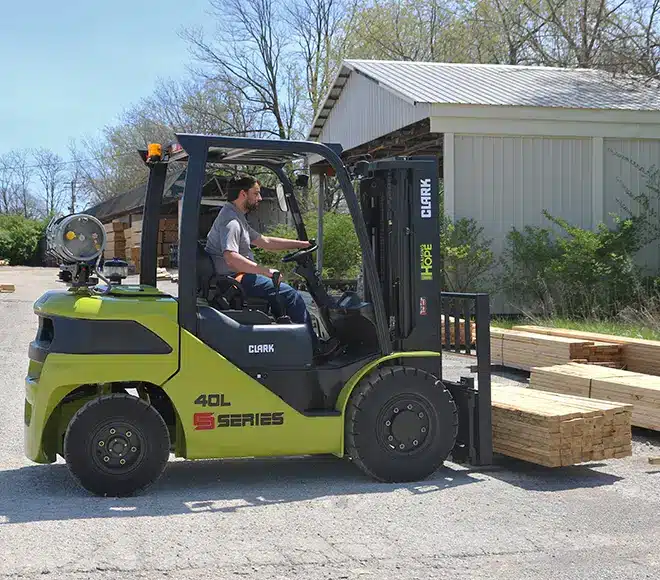
The material handling industry is at the heart of modern logistics. Every product that reaches a retailer, manufacturer, or consumer must first travel through a system of forklifts, lift trucks, pallet movers, and storage solutions engineered to perform with precision. As global supply chains accelerate and businesses look for ways to operate more efficiently, the quality of material handling equipment becomes more important than ever. One company consistently recognized for its engineering leadership is Clark Material Handling.
For generations, Clark has played a defining role in shaping the industry’s standards for durability, safety, and long-term dependability. Today, the company continues to engineer equipment that responds to the growing complexity of warehousing, manufacturing, and distribution environments.
A Historic Contributor to the Material Handling Industry
Clark’s legacy is deeply interwoven with the modern material handling industry. The company created the world’s first industrial forklift more than 100 years ago, laying the foundation for a sector that is now essential to global commerce. Over the decades, Clark’s innovations helped drive improvements across the entire industry—from stronger mast designs to more efficient drivetrains and improved ergonomic features.
This long history of engineering breakthroughs gives Clark a unique understanding of the operational challenges businesses face. Instead of simply producing forklifts, Clark continues to engineer complete solutions designed to enhance workflow efficiency and functional performance.
Durability Designed to Withstand Real-World Conditions
In the material handling industry, equipment often operates in demanding conditions: extreme temperatures, long-duty cycles, tight aisles, heavy loads, and fast-paced environments. Clark’s engineering teams build equipment with these realities in mind.
Reinforced Structures
Clark forklifts feature strong steel frames, high-strength masts, and durable components that maintain stability and performance over years of heavy use. This dedication to structural integrity reduces downtime and supports the nonstop demands of industrial operations.
Precision-Engineered Components
Hydraulic systems, transmissions, and electronic controls are manufactured to exact specifications, ensuring smooth, consistent operation shift after shift.
Comprehensive Testing
Clark subjects its equipment to rigorous load, endurance, and environmental testing to confirm reliability under real-world conditions.
This focus on durability allows Clark equipment to deliver long-term value—a key factor for companies that depend on operational consistency.
Engineering Safety and Comfort for Today’s Workforce
The material handling industry continues to emphasize operator safety and ergonomic design, and Clark has been a leader in integrating these principles into its equipment.
Comfortable, Ergonomic Cabins
Clark designs operator compartments with adjustable seating, easy-to-reach controls, and reduced vibration. These features help operators stay focused and productive throughout long workdays.
Improved Line of Sight
Better visibility reduces risk. Clark engineers its masts, overhead guards, and lighting systems to maximize the operator’s field of view in both indoor and outdoor environments.
Built-In Protective Systems
From enhanced stability systems to reinforced structures and automatic safety features, Clark’s equipment helps minimize the risk of accidents and supports safer operations.
By combining ergonomics with engineering precision, Clark helps companies reduce workplace injuries and increase productivity.
Supporting the Industry’s Shift Toward Sustainability
Sustainability is rapidly becoming a defining trend in the material handling industry. Companies are increasingly adopting electric equipment to reduce emissions, lower noise levels, and cut operating costs. Clark has stayed ahead of this movement with advanced electric forklift models designed for efficiency and performance.
Electric Power With High Productivity
Clark electric forklifts offer long runtime, strong lifting capability, and reduced energy consumption, helping operators maintain productivity without sacrificing environmental goals.
Innovative Battery Systems
Lithium-ion and high-efficiency battery designs help lower energy costs and reduce the need for maintenance and replacement parts.
Cleaner, Quieter Operation
Electric forklifts create healthier, quieter working environments—important factors for indoor warehouses and facilities focused on sustainability.
Clark’s electric lineup demonstrates the company’s commitment to supporting the environmental priorities emerging across the material handling industry.
Engineering for Faster, More Efficient Workflows
Productivity is one of the strongest competitive advantages in the material handling industry. Clark helps companies meet growing operational demands by engineering equipment that improves speed, maneuverability, and maintenance efficiency.
Responsive Handling
Clark forklifts are engineered with precise steering and compact designs that allow operators to maneuver safely through tight spaces.
Efficient Load Movement
Fast lift speeds, stable lowering, and smooth hydraulic response help reduce cycle times and improve overall workflow efficiency.
Serviceability That Minimizes Downtime
Easy-access components and simplified diagnostics make maintenance faster, keeping equipment running and reducing labor costs.
These engineering advantages help facilities maintain smooth workflows and adapt to the high expectations of modern logistics systems.
Global Support That Strengthens Equipment Performance
Beyond manufacturing, Clark supports the material handling industry through a worldwide network of trained technicians, parts resources, and dealer services. Whether customers need operator training, fleet guidance, or rapid parts support, Clark provides the expertise to keep equipment performing at its best.
This global infrastructure ensures that the company’s engineering excellence extends beyond product design and into long-term customer success.
A Future Focused on Industry Innovation
As automation, real-time monitoring, and advanced energy systems become more common in the material handling industry, Clark continues investing in next-generation engineering. Future development areas include enhanced data-driven fleet management, improved operator-assist technologies, and further advancements in electric power systems.
Clark’s ongoing commitment to innovation ensures that it will remain a foundational force as the material handling industry continues to evolve.